I spent fourteen years writing Midnight Radio. This week, I spent three hours fixing my printer so I could print a shipping label and mail a copy. By “fixing,” I mean trying, getting frustrated, cussing, and finally going out and buying a new one. Apparently, I have been going about this all wrong.
An ad came across my phone for a program called BookNova. According to the ad, you pick a genre, give it a story spark, and in under an hour you have a finished novel. Plot, characters, chapters, cover, illustrations. Ready to publish.
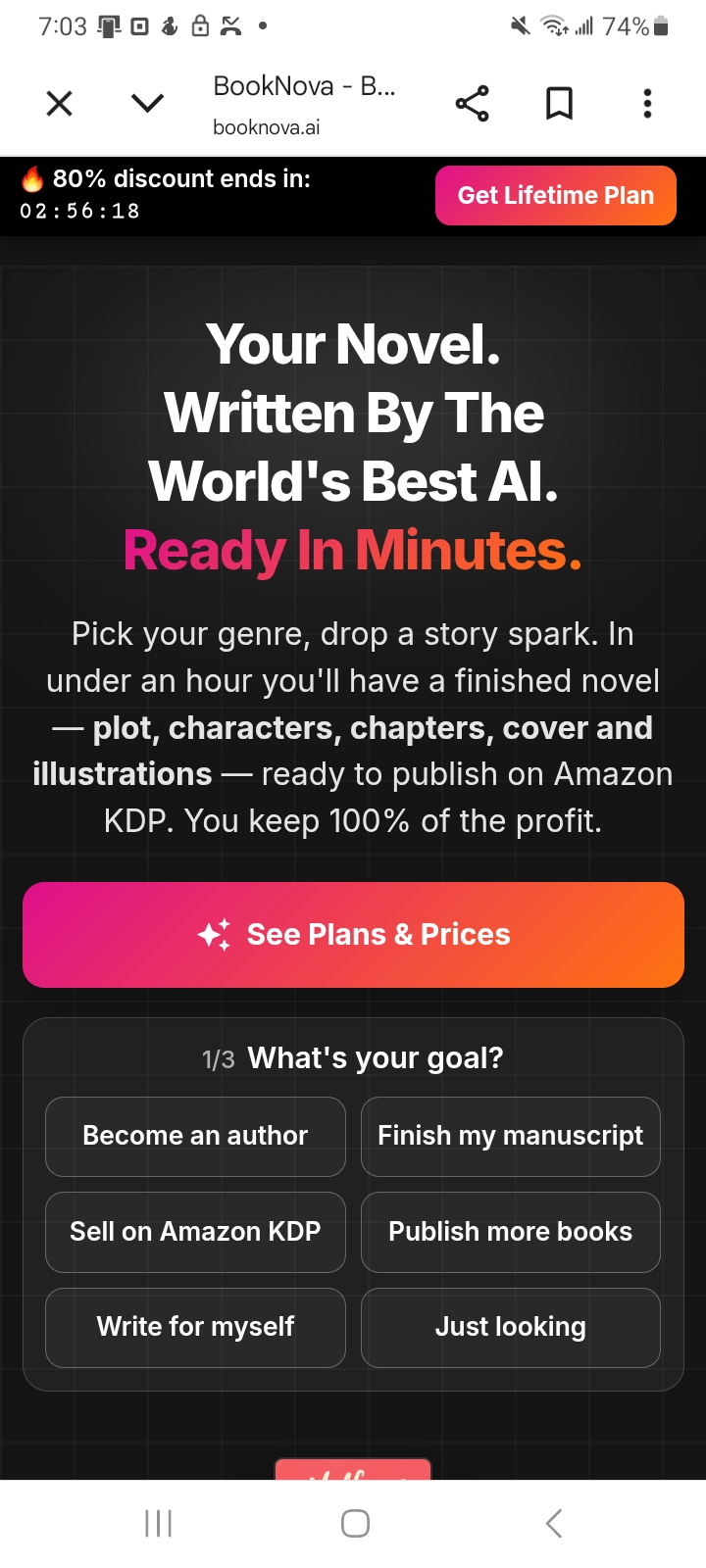
The ad that started this conversation.
I shared it with my editor, Linda, and we had a good laugh.
Fourteen years. All those drafts. All those commas. All those chunks she made me take out. And here was a button that could apparently settle the whole business while I was still cussing at the printer.
The instant win button.
Except, for what I want out of writing, it would be an instant lose button.
I keep thinking about another book. A little baby book my grandmother kept for my father, Jerry Wesley Adams.
It is covered in delicate pink silk, knitted in an almost holographic pattern that catches the light. It bears the marks of age, yet here it is, preserved for eighty-five years. And inside are the little things she wanted to remember.
Would it have been a good idea for my grandmother to have had a magic button she could press to write that baby book? What would it have known about her little boy? Would it have noticed him feeding his dog through the bars of his bed? She was there. She loved him. She paid attention, and she wrote those things down. That is what I found in her book all these years later.
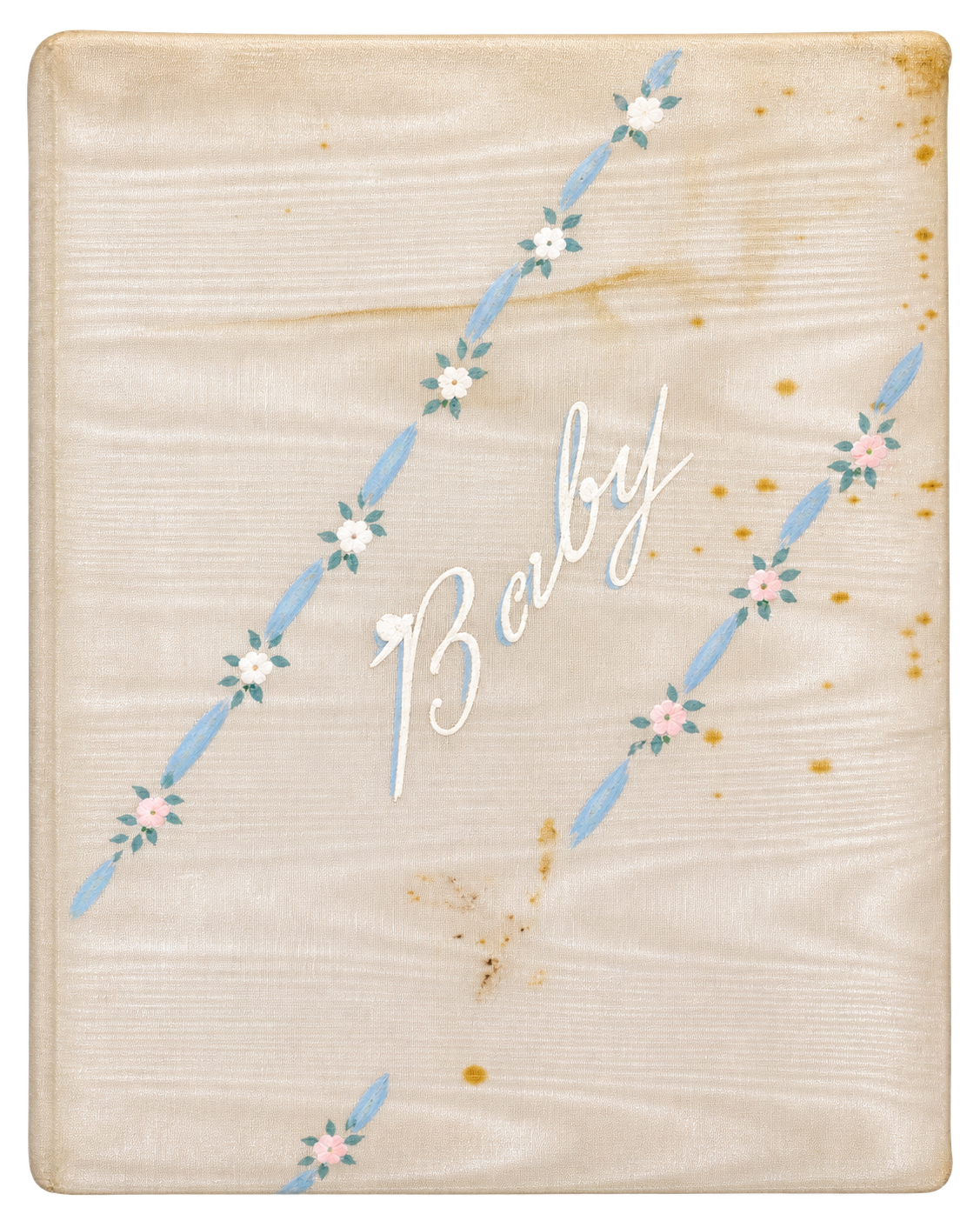
My father’s baby book. She saved the little things.
It has the ordinary things you expect. His weight. Birthdays. Christmas presents. Where they lived and who came to visit. There are tracings of his little hand and foot at five months old. She wrote stories, too, under a heading called “Mother’s Notes.”
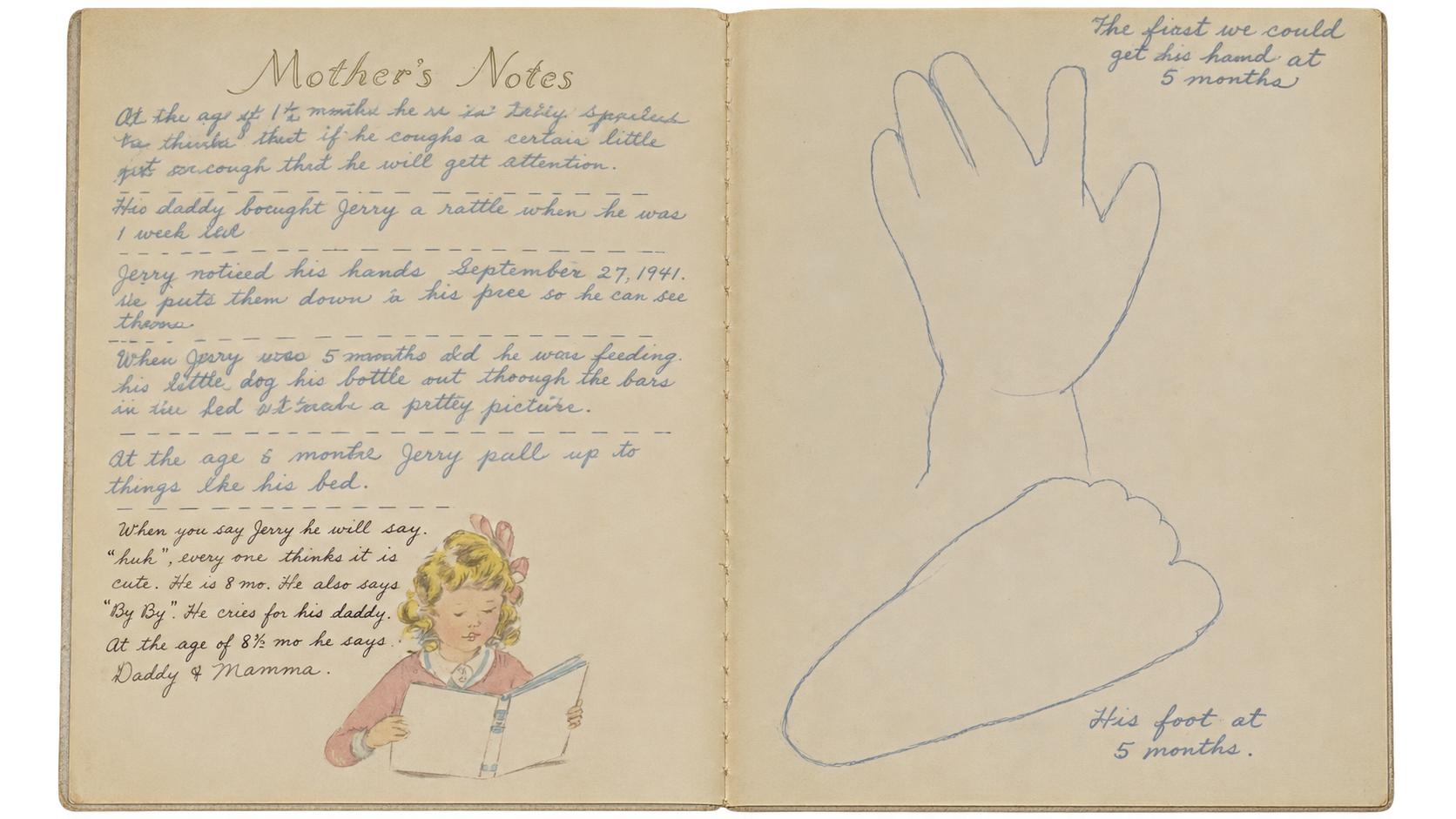
His little hand and foot at five months, saved beside my grandmother’s stories.
At five months, he was feeding his little dog his bottle through the bars of his bed. She thought it made a pretty picture.
I like that. She stopped long enough to notice it, and then she took the trouble to write it down.
But one entry really made me laugh.
She wrote that when someone said “Jerry,” he would answer, “huh.”
That was my dad.
You could say “Hey, Dad,” and get that same response. Thirty, forty, fifty, sixty, seventy, eighty years old. “Huh?”
Then she recorded that at eight months he was saying “bye-bye.”
Now, my father had a business. People called him to get their cars fixed and make appointments. And at the end of those conversations, this grown man would say, “Bye-bye.”
I always thought that was funny. Then I opened this book and discovered he had been doing it since he was eight months old.
No matter how busy he was, Dad was always glad to talk to you when you called. That stays with me.
I can hear him.
My grandmother was writing about her baby. I was reading about my father. We knew him at different points in his life, and there he was in both of our stories.
They are gone now. That mother and that little boy. The people visiting at Christmas. Families change, people die, and the little stories get harder to find. Sometimes the last person who remembers something dies, and nobody even knows what was lost.
This one survived because she wrote it down. Now I get to tell you.
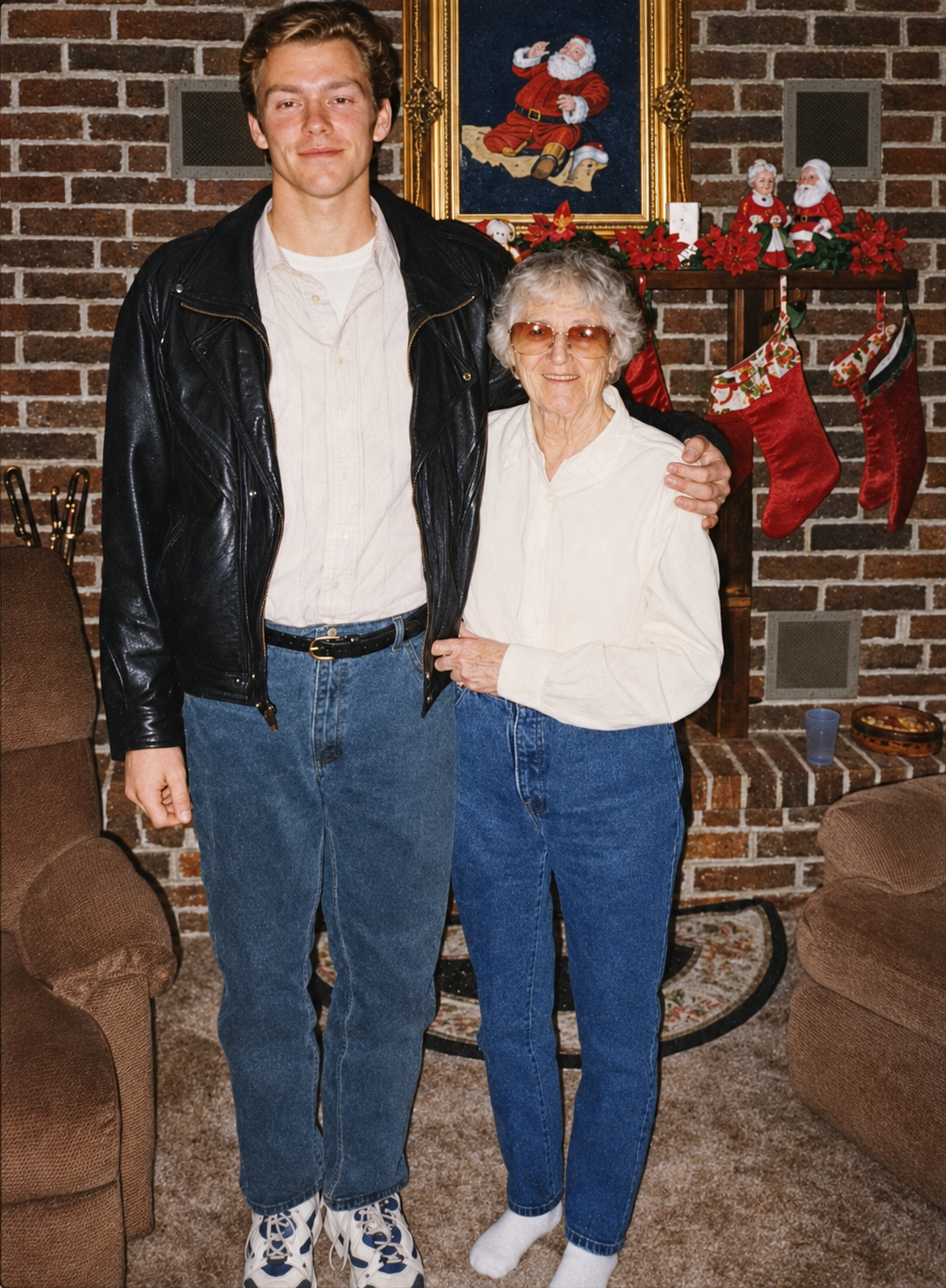
Me with my grandmother at Christmas, when I was 17. The woman who wrote those notes.
That is part of where writing comes from for me.
I stop. I pay attention. I observe. Something makes me laugh, or hurts, or stays with me long enough that I have something to say about it. I want to share it with somebody.
I write fiction, so of course I make things up. I put people in situations they have never been in and give them things to face that I hope none of us ever will. But the people have to feel real to me. Their fear, their foolishness, the way they love somebody, the things they say without thinking. Those come from paying attention to life.
And when I draw on my own experience, I have a reason for bringing it to you. I know something about this. I have something to say. Maybe it will help. Maybe you will recognize a feeling you thought nobody else understood.
I want to stand beside the people I give my stories to. Stand with them. That connection means something to me.
I am happy to have help with the work. Anyone who has seen my commas, or watched me wrestle with a printer, knows that. But I still have to bring my experiences, my observations, and my reason for telling the story. I have to care about what I am handing you.
I have not tested the program. I am talking about the promise in the ad and why it left me laughing, then thinking. A finished book in an hour sounds like winning if having a finished book is the whole goal.
For me, the value is in what I have to share and the person I hope to reach.
My grandmother noticed a little boy saying “bye-bye.” Decades later, her grandson opened a book and heard his father.
That is why I want to tell these stories.
And now you know that little thing about him, too.
With Christmas coming, I am thinking about the stories we give each other, too. If somebody on your list likes a little darkness with their holiday reading, we are finishing the Midnight Radio Special Edition hardcover by the end of November. I sign every one.
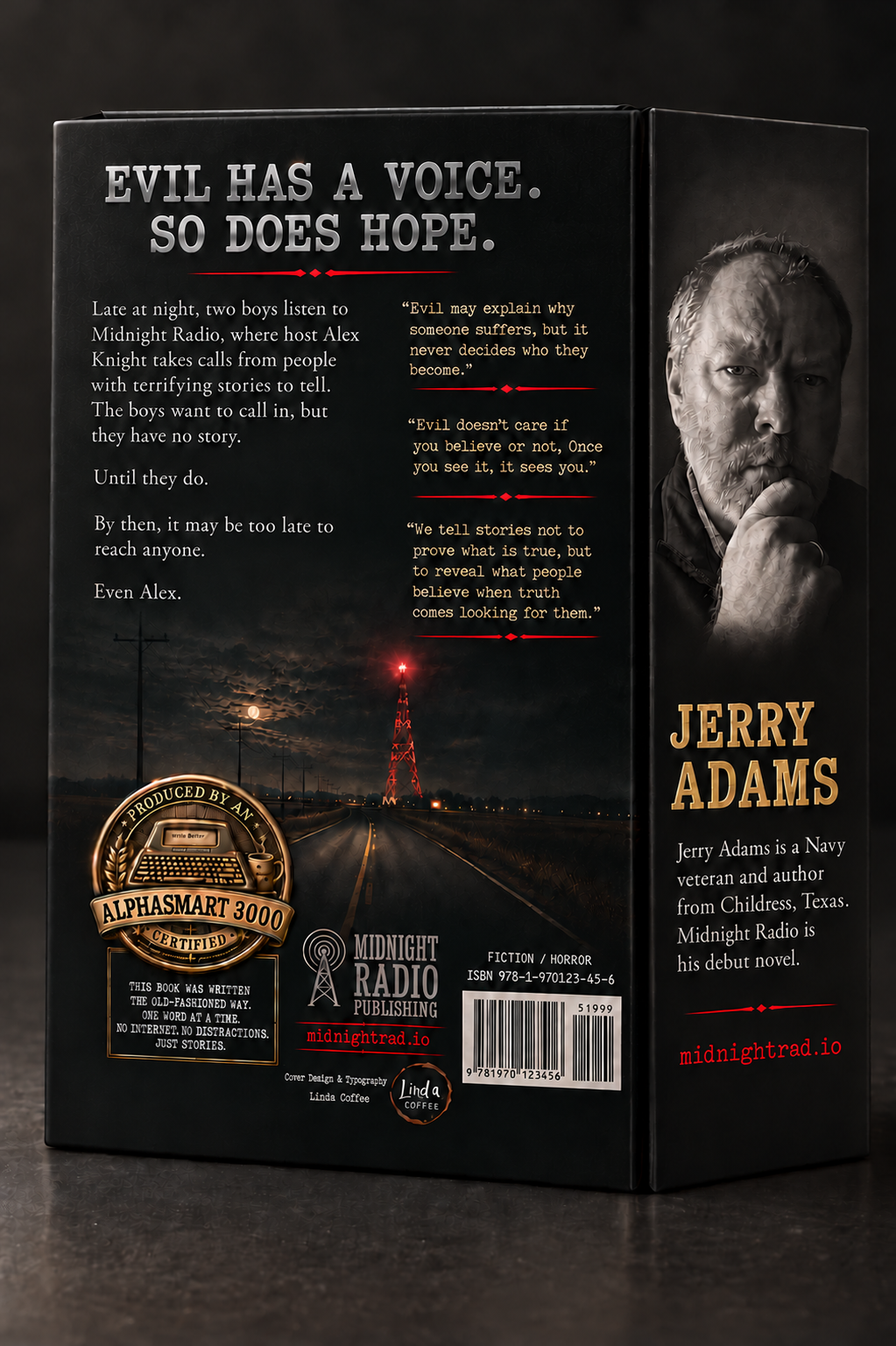
If the story isn’t scary enough, stare at the author pic.
Give it to someone you love, or give yourself something to read after everyone else has gone to bed and the house gets quiet. Visit the Special Edition page for updates and ordering details as they become available.
Give them the gift of nightmares this Christmas. I will even put my name on it.